

Do you often feel exhausted by the misunderstandings and minor conflicts that arise, hindering work progress and affecting your team’s morale? The key to overcoming these obstacles lies in communication skills. Improved communication can lead to skyrocketing productivity, better coordination among team members, minimized stress, and healthy professional relationships.
So, how can we enhance team communication skills?
Why do team communication skills matter?

It’s important to acknowledge that not everyone is born with good communication skills, however, these skills can be cultivated. Strong teamwork and a positive working environment serve as a boost for managers. By mastering teamwork, you can enhance your influence and become the role model your team needs.
Moreover, teamwork skills do not develop in isolation; a suitable team environment is crucial. In the 1970s, social and organizational psychologist Richard Hackman identified three “enabling conditions” for teams to thrive, which are still relevant today:
- Convincing direction
- Tight structure
- Supportive context
The benefits of effective teamwork
Numerous studies have shown that teamwork significantly enhances problem-solving, increases innovation, fosters personal development, and reduces work pressure. Let’s delve deeper into each of these benefits:
Solve problems more effectively
“Behind every genius is a team,” said Murphy, an American aerospace engineer.
You may have heard of a scientist honored for a groundbreaking initiative who continuously thanked their collaborators during their acceptance speech. This shadow of dedication and cooperation, what we call “teamwork,” is crucial for success.
A study published in the Journal of Personality and Social Psychology indicates that “Groups of three, four, or five perform better on complex problem solving than the best of an equivalent number of individuals.” This is always true and effective when it comes to problem-solving. Working together allows us to gather diverse opinions and information. From there, we can discuss, analyze, and evaluate them to find the most effective solution.
Builds connections
Teamwork not only boosts productivity but also fosters connections among team members. Working together toward a common goal allows individuals to meet, interact, and grow, even those who have never collaborated before.
Build your team connections through Top 16 Team Building Activities
Increases work productivity
When team members collaborate to process information and find solutions, results are achieved much faster compared to working independently. Individual ideas may arise, but they might not address the group’s overall challenges. Engaging everyone’s input in discussions leads to more objective solutions, saving time and effort for individuals, teams, and organizations alike.
Unleashes creative potential and innovation
We often fear differing opinions and those who are very different from ourselves. However, research from the Harvard Business Review confirms that “diversity unlocks the door to innovation.” This principle encourages us to leverage the power of differences. In teamwork, diverse perspectives lead to multifaceted viewpoints, generating a wealth of fresh ideas. Listening to varied opinions helps individuals overcome biases, steering them toward innovative solutions.

Promotes personal development
Effective communication skills encourage each member to contribute to problem-solving and foster a collaborative spirit. Interaction among team members promotes openness and the free development of ideas. Sharing information and engaging in group discussions allow everyone to learn from one another.
As Dr. Susan McDaniel, a psychologist at the University of Rochester Medical Center, states: “Maybe working in a team you’ll discover you could be a better listener. That’s a skill you can grow in and then take home and use to improve your family interactions.”
Reduces work pressure
Workplace burnout is increasingly common, with a Deloitte survey revealing that “77% of 1,000 participants admitted to experiencing burnout at work.” Teamwork provides an effective solution by sharing workloads. Team members can easily understand and empathize with one another, providing support to solve tasks collectively.
Effective communication not only helps resolve internal issues but also reduces the psychological pressure when facing conflicts within the team. This fosters an open work environment where everyone feels more comfortable expressing their opinions, confidently contributing, and growing. As a result, work performance improves, and team morale becomes more positive.
Looking to take your team’s communication skills to the next level? Don’t miss out on The Ultimate Guide to Fostering Effective Team Collaboration!
7 ways to improve team communication skills

Foster an open communication culture
To build a strong team, you need to create an environment where everyone feels comfortable expressing their opinions, concerns, or suggestions without fear of judgment. An open communication culture helps solve problems quickly and builds trust and connections among members.
For example, organize regular meetings in a private setting where everyone can ask questions and share feedback. When members feel that their opinions are valued, they will be more proactive in participating in discussions, thus contributing to enhanced overall work effectiveness.
For more tips, check out this article: Effective Communication: What It Is and How to Improve?
Set the communication standards (via email, message, or direct conversation)
Establishing consistent communication guidelines is essential for minimizing misunderstandings and ensuring information flows smoothly across the team. Define when to use different communication channels, such as emails for formal updates, messaging apps for quick questions, and direct conversations for urgent or complex matters. Clear standards help team members know what to expect and reduce delays in response times.
For instance, you can implement a rule where team members check and respond to emails within a set timeframe, while urgent matters should be discussed directly through calls or in-person conversations. This structure promotes clarity, enhances team responsiveness, and reduces the risk of important information being overlooked.
Utilize the right tools for communication
Modern team communication tools are essential for optimizing connectivity within the team. Applications like BIC Chat, Slack, Microsoft Teams, and Zoom facilitate quick information exchange and effective meetings regardless of location.
For instance, BIC Chat, the chat tool of Beincom – a social hub and community platform, offers features that enhance team communication skills:
- Organized private chat spaces: BIC Chat separates personal and group messages for easy management.
- Efficient group chat organization: The exclusive ICS structure intelligently organizes chat groups, automatically creating corresponding channels for new projects.
- Smart threads feature: This separates discussions into distinct topics, reducing the chances of messages getting lost.

Encourage active listening
Active listening is important for good team communication skills. It’s not just about hearing words; it’s about understanding and caring for each other. Creating a space where people listen and empathize will greatly improve discussions.
Set clear roles and responsibilities
When team members know what their roles and responsibilities are, they feel more confident in their work. This reduces confusion and helps everyone take responsibility, leading to better performance. For instance, using a team diagram or a task board can help everyone see and understand their roles. When team members know how they contribute, they feel more assured in their tasks.
Provide constructive feedback
Constructive feedback is essential for communication and helps individuals and teams grow. Positive and helpful feedback encourages improvement and motivates everyone to reach their full potential.
Tips: Use the Sandwich model for feedback: start with a genuine compliment, then give constructive criticism, and finish with encouragement. This way, the person feels valued while also seeing ways to improve team communication skills.
Hold regular team meetings
Regular team meetings are key to staying on track and informed. These meetings help everyone understand goals and work progress while providing a chance to tackle new issues early.
For example, hold weekly or bi-weekly meetings to discuss progress, challenges, and fresh ideas. Working together makes everyone feel important, creating a stronger team.
Teamwork can help ordinary people achieve amazing things. However, remember that teamwork skills are not magic. If you want to boost your productivity, don’t overlook these skills.
Improving team communication skills encourages collaboration and creativity. The strategies mentioned above help reduce misunderstandings and strengthen team bonds. By taking small steps, you’ll notice positive changes in how your team works together.
As you know, a project is successful when all members contribute. Disconnected teamwork, where everyone only does their part, will not yield good results for the project. Therefore, team members need to prioritize the group’s common goals and align them with their personal objectives
If you want to elevate your team’s performance, it’s essential to enhance your business communication skills. Discover actionable techniques and insights in our article:
Common challenges in team communication
Although teamwork is one of the most essential and common activities in businesses, not every team operates smoothly and delivers the expected results. Below are some common challenges in teamwork that you should be aware of to avoid in the future.
Egos of team members
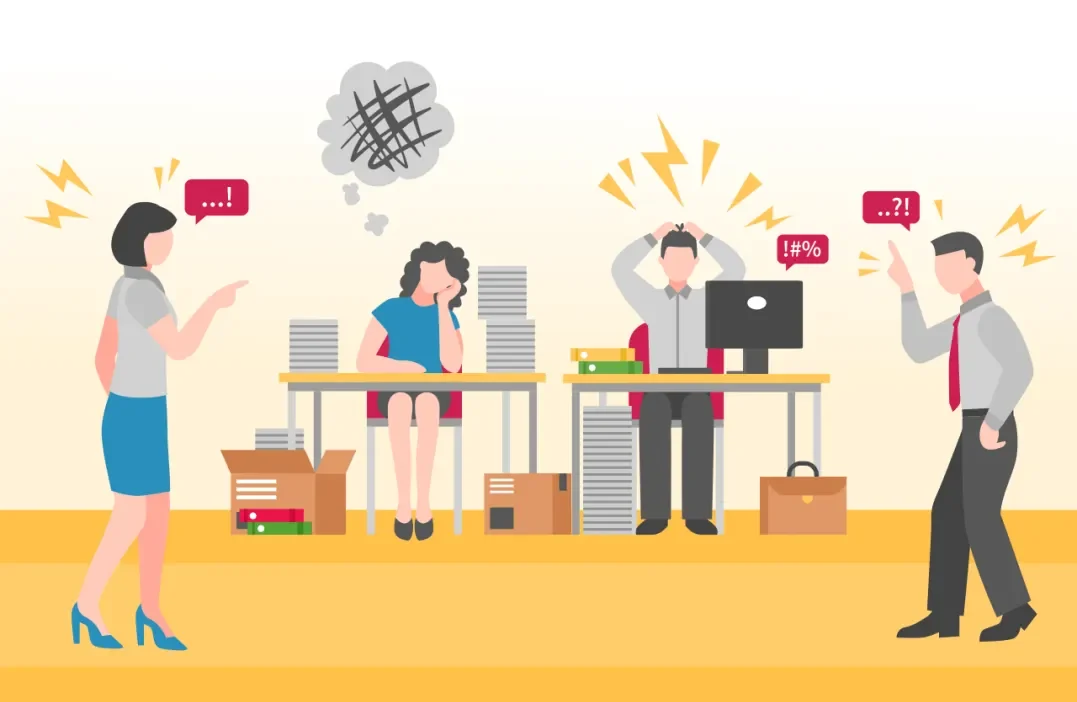
One of the most frequent issues faced in teamwork is the clash of egos. In any team, there are individuals with unique personalities, experiences, and viewpoints. While diversity can foster creativity, it can also lead to conflict if some members allow their egos to dominate. When members prioritize their personal views over the collective goals of the group, collaboration becomes strained. This often leads to arguments or an unwillingness to compromise, making it difficult to reach a consensus.
Conflicts over ideas
During a meeting, many ideas may be proposed, so it’s inevitable that some members will agree while others will oppose certain ones. At this point, the team leader plays a crucial role in resolving conflicts by analyzing the ideas of each individual and selecting the most suitable one.
First of all, the leader should keep himself/herself as neutral as possible, which allows him/her to listen and consider all ideas equally. Most of leaders do not get it, or the pressure of being in charge somehow forces them to have an idea for themselves, thus cause bias, and further, the conflicts.
Lack of trust among team members
Trust is the foundation of effective teamwork. When team members do not trust each other, communication breaks down, tasks are not delegated effectively, and members are less likely to collaborate. Without trust, it becomes challenging to work toward common goals, and productivity suffers as a result.
Leaders need to focus on building trust through regular team-building exercises, fostering open communication, and encouraging team members to mutually support. A sense of trust can also be strengthened through shared experiences and collaborative successes, which help bond the team together.
Lack of communication and information sharing
Lack of interaction and inconsistent communication are common challenges in teamwork. Strong interaction between members is essential for building cohesion and enhancing efficiency. With today’s various team communication tools, teams can easily stay connected beyond face-to-face meetings.
However, when information and data are not consistently shared, misunderstandings arise, affecting the team’s overall performance. Clear, regular communication is crucial to ensure everyone is on the same page.
Lack of interest in common goals
A lack of interest in the team’s common goals is one of the typical challenges in teamwork. At this point, some members may only focus on their personal benefits and forget about the collective success of the team.
Sign up for BIC Chat, the best chat tool for communities on Beincom, loved by many users. With its advanced ICS structure for organized group chats, dedicated message threads, and a clear chat environment, BIC Chat enhances community and group management, improving both teamwork and individual tasks.
Beincom


