Traditional project management methods often struggle to keep up with fast-changing business needs. Agile project management offers a flexible, iterative approach that helps teams adapt, collaborate, and deliver value faster. But how does Agile work, and is it right for your team? Let’s explore Agile in depth and uncover the key principles, frameworks, benefits, and challenges you need to know.
What is Agile Project Management?
Agile project management is a flexible, iterative approach that focuses on delivering value quickly while continuously adapting to change. Unlike traditional project management methods that follow a rigid, step-by-step process, Agile embraces uncertainty, allowing teams to respond dynamically to new information, customer feedback, or shifting business priorities.
Traditional project management (like Waterfall) follows a strict sequence—planning, execution, and delivery. Once a phase is completed, changes become difficult and costly. Agile, however, embraces change. Projects are broken into smaller increments, with frequent reassessments to ensure alignment with evolving goals.
Agile is widely used beyond software development, including in marketing, product development, and finance, because it:
- Allows faster delivery by focusing on incremental progress.
- Enhances collaboration through cross-functional teamwork.
- Improves adaptability by integrating real-time feedback.
Agile isn’t just a process—it’s a mindset that helps businesses stay competitive in a rapidly changing environment.

Wanna to boost your team collaboration? Explore tips in The Ultimate Guide to Fostering Effective Team Collaboration
Key Principles of Agile
At the heart of Agile project management is the Agile Manifesto, which outlines 4 core values and 12 guiding principles. However, simply knowing these principles isn’t enough—you need to understand how they shape real-world project execution. Let’s break them down.
4 Core Values of Agile (Agile Manifesto)
1. Individuals and interactions over processes and tools
- Agile prioritizes people over rigid workflows. The best results come from empowered, communicative teams rather than strict adherence to predefined tools.
- Example: Instead of relying solely on project management software, Agile teams hold daily stand-up meetings to keep everyone aligned.
2. Working software over comprehensive documentation
- Traditional project management often involves excessive planning and documentation before execution. Agile shifts the focus to delivering functional results quickly.
- This doesn’t mean documentation is ignored—it’s just kept lean and practical, ensuring teams don’t waste time on unnecessary paperwork.
3. Customer collaboration over contract negotiation
- Agile welcomes client involvement throughout the process rather than relying solely on upfront contracts. Regular feedback loops ensure the final product truly meets user needs.
- Example: Instead of delivering a finished product after months of development, Agile teams release a minimum viable product (MVP) early and refine it based on user feedback.
4. Responding to change over following a plan
- In fast-changing industries, sticking to a rigid plan can be a liability. Agile embraces change, allowing teams to pivot based on real-world conditions.
- Example: If a new market trend emerges, an Agile team can reprioritize features without derailing the entire project.
12 Agile Principles (and What They Mean in Practice)
- Customer satisfaction through early and continuous delivery – Deliver value frequently, not all at once.
- Welcome changing requirements, even late in development – Stay flexible to market shifts and client needs.
- Deliver working solutions frequently – Regular, small releases prevent big failures.
- Business and developers must work together daily – No more silos; Agile integrates cross-functional collaboration.
- Build projects around motivated individuals – A great team, not just great processes, drives success.
- Use face-to-face conversation as the most effective method of communication – Misunderstandings happen less when discussions are direct.
- Working solutions are the primary measure of progress – Output is only valuable when it’s functional and usable.
- Maintain a sustainable work pace – No burnout; Agile promotes steady, long-term productivity.
- Continuous attention to technical excellence and good design – Quality is built-in, not patched later.
- Simplicity—the art of maximizing work not done—is essential – Do only what truly adds value.
- Self-organizing teams produce the best results – Empowered teams make faster, better decisions.
- Regular reflection and adjustments improve effectiveness – Agile teams hold retrospectives to refine their approach.
Simply following Agile “by the book” isn’t enough—true Agile success comes from understanding why these principles exist and applying them in a way that suits your team and business.
Agile Project Management Methodologies
Agile is not a rigid system but a flexible mindset that teams adapt based on their needs. To bring structure to Agile, various frameworks have been developed, each with its unique strengths. But which one is the right fit for your team? Let’s break them down.
Scrum – Structured Iterations for Fast Delivery
Scrum is one of the most widely used Agile project management for dummies, known for its fixed-length iterations (sprints) and clear team roles. Work is divided into sprints (usually 1-4 weeks long), with each sprint producing a usable product increment.
The secret behind Scrum’s efficiency lies in its rhythm—a cycle of planning, execution, and reflection that keeps teams focused.
How Scrum Works in Action:
- At the start of a sprint, the team meets to plan the work (Sprint Planning).
- Every day, there’s a quick check-in (Daily Stand-up) to track progress.
- At the end, the team reviews what they accomplished (Sprint Review) and discusses how to improve (Sprint Retrospective).
When to Use Scrum?
If you need predictability, fast feedback loops, and clear accountability, Scrum is a great choice. But it does require discipline—without strong sprint planning, teams can struggle to complete their commitments.
Kanban – Visualizing Workflow and Reducing Bottlenecks
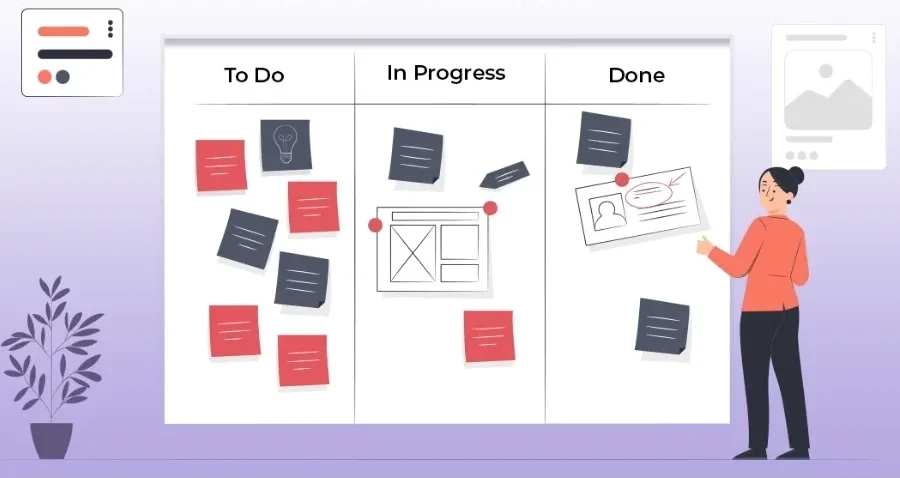
Kanban is Agile project management without fixed timeframes. Instead of working in sprints, teams continuously manage tasks by visualizing their workflow on a Kanban board. Tasks move from “To Do” → “In Progress” → “Done,” creating a clear, real-time snapshot of the team’s workload.
Why Kanban Works:
- It prevents overloading—by limiting the number of tasks in progress at any time.
- It promotes efficiency—teams can focus on one task at a time rather than juggling multiple priorities.
- It reduces bottlenecks—making workflow problems visible so teams can fix them quickly.
When to Use Kanban?
Kanban is best for teams that handle ongoing tasks, such as customer support, marketing, or DevOps. However, without clear limits on work in progress, Kanban can lead to unfinished tasks piling up.
Lean – Maximizing Value, Eliminating Waste
Lean takes Agile project management a step further by focusing on delivering maximum value with minimal effort. The idea? If something doesn’t contribute to customer value, eliminate it.
Lean in Action:
- Cut unnecessary steps: Simplify processes to remove delays and inefficiencies.
- Prioritize what matters: Focus on features that provide real value to users.
- Improve continuously: Encourage small, frequent improvements rather than large, disruptive changes.
When to Use Lean?
Lean works best for startups and innovation-driven teams that need to move fast, test ideas quickly, and stay cost-effective. But it requires deep customer insight—otherwise, teams might cut things that actually matter.
XP (Extreme Programming) – Enhancing Software Development
If Agile is about flexibility, XP (Extreme Programming) is about engineering discipline. It’s designed for software teams that need high-quality, bug-free code with rapid iterations.
XP Practices That Set It Apart:
- Pair programming: Two developers code together, leading to higher-quality work.
- Test-driven development (TDD): Write automated tests before writing actual code to prevent bugs.
- Continuous integration: Code is merged and tested frequently to catch issues early.
When to Use XP?
XP is ideal for engineering-focused teams that value code quality and collaboration. But it’s not for everyone—if developers aren’t comfortable with constant feedback and pair programming, XP can feel overwhelming.
SAFe (Scaled Agile Framework) – Agile Project Management for Large Enterprises
Agile started as a way to help small teams work efficiently—but what about large organizations? That’s where SAFe (Scaled Agile Framework) comes in.
SAFe introduces structure and coordination to Agile at scale. It ensures that multiple teams working on the same project stay aligned, synchronized, and focused on the same goals.
How SAFe Works:
- Agile Release Trains (ARTs)—Teams coordinate their work on a shared roadmap.
- Program Increments (PIs)—SAFe uses longer cycles (8-12 weeks) instead of short sprints.
- Cross-team planning—Ensures dependencies between teams don’t cause roadblocks.
When to Use SAFe?
SAFe is great for large enterprises handling complex projects, but it does introduce more layers of management, which can slow down Agile’s flexibility if not handled well.
Which Agile Methodology is Right for You?
Each Agile framework has its strengths, and no single method works for every team. The best approach depends on your team’s size, work style, and goals. Here is a table of comparison between different Agile methodologies:
| Framework | Best for | Key Benefit | Potential Challenge |
| Scrum | Teams needing structure | Clear roles, fast iterations | Can feel rigid for creative projects |
| Kanban | Continuous work (support, DevOps) | Flexible, visual workflow | Hard to manage without WIP limits |
| Lean | Startups, rapid innovation | Cuts unnecessary work | Requires deep customer insight |
| XP | Software development | High-quality, maintainable code | Requires engineering discipline |
| SAFe | Large organizations | Scales Agile across teams | Can introduce bureaucracy |
Every organization has different needs, so choosing the right framework depends on your team’s structure, project complexity, and business goals. Many companies combine multiple Agile methods to get the best results!
Benefits of Agile for Teams and Businesses
Agile isn’t just a buzzword—it’s a game-changer for businesses looking to stay competitive in a fast-paced world. Here’s how Agile helps teams deliver better results, work more efficiently, and adapt quickly to change.
1. Faster Delivery and Higher Product Quality
Agile’s iterative approach allows teams to release smaller, functional increments instead of waiting months (or years) for a final product. This means businesses can bring value to customers sooner and refine their offerings based on real-world feedback.
Continuous testing and regular feedback loops also help teams catch issues early, reducing the risk of major defects down the line. Instead of spending months fixing problems after launch, Agile teams improve product quality as they go.
2. Increased Collaboration and Transparency
Traditional project management often creates silos between departments, but Agile encourages cross-functional collaboration. Teams work together closely, share knowledge, and communicate openly, leading to fewer misunderstandings and faster decision-making.
Daily stand-ups, sprint reviews, and retrospectives keep everyone on the same page, making it easier to align goals and adapt to changes without disrupting workflow.
3. Better Adaptability to Market and Customer Needs
Customer demands and market conditions change constantly, and rigid project plans can’t always keep up. Agile project management allows teams to adjust priorities quickly based on new insights, feedback, or external changes.
Because Agile teams deliver working features in short cycles, they can incorporate customer feedback early, ensuring that the final product actually meets users’ needs—not just what was planned months ago.
4. Reduced Risk and Greater Predictability
Unlike traditional “all-or-nothing” project delivery, Agile spreads risks over multiple short cycles. If something isn’t working, teams can pivot before wasting resources on the wrong approach.
Regular check-ins, backlog refinements, and transparent progress tracking also help businesses predict outcomes more accurately, reducing the likelihood of costly surprises at the end of a project.
5. Higher Team Engagement and Productivity
Agile empowers teams with more autonomy and accountability, which leads to higher motivation. When team members feel ownership over their work and have a say in decision-making, they tend to be more engaged and deliver better results.
Smaller, manageable workloads and continuous feedback loops prevent burnout, while structured Agile ceremonies like sprint planning and retrospectives help teams stay focused and improve efficiency over time.

Challenges & Common Mistakes in Agile Adoption
Agile project management promises flexibility, faster delivery, and better collaboration, but adopting it successfully isn’t always easy. Many teams struggle due to misunderstandings, resistance to change, or poor implementation.
Let’s break down some of the most common challenges and mistakes—along with insights on how to avoid them.
Resistance to Change and Cultural Shift
One of the biggest obstacles to Agile adoption is that people naturally resist change. Traditional organizations—especially those used to rigid hierarchies and top-down decision-making—may find it difficult to shift to Agile’s collaborative and decentralized approach.
Strong leadership support and clear communication help ease the transition. Starting with small Agile projects and fostering a culture of learning makes adoption smoother.
Lack of Team Training and Stakeholder Buy-in
Agile project management requires a fundamental shift in how teams work, but many organizations jump in without proper training or stakeholder involvement. If teams don’t understand their roles or leaders don’t fully support Agile, the transition can quickly fail.
Invest in Agile coaching, workshops, and certifications. Ensuring stakeholders, executives, and team members all understand their roles and responsibilities within the Agile framework helps align efforts and reduce friction in adoption.
Measuring Success with Traditional Metrics
In traditional project management, success is often measured by on-time and on-budget delivery. However, Agile prioritizes customer value and adaptability, making old-school performance metrics less relevant.
Shifting to Agile-specific metrics like cycle time, velocity, and customer satisfaction provides a clearer picture of progress and continuous improvement.
Overloading Teams and Ignoring Sustainable Workflows
Agile project management promotes efficiency, but some teams fall into the trap of overcommitting and burning out by taking on too much work in each sprint.
Focusing on realistic sprint planning, limiting work in progress, and maintaining a sustainable pace ensures long-term success.
Adopting Agile project management methodology successfully requires more than just using the right tools—it’s about embracing a new way of thinking and working. Now, let’s explore how to determine if Agile is the right fit for your team and how to implement it smoothly.

Inefficiencies and miscommunication slow your team down? No worries. Find out solutions with Standard Operating Procedures (SOPs)
Is Agile Right for Your Team?
Agile project management isn’t a one-size-fits-all solution. While it brings flexibility and faster delivery, not every team or project benefits from it. Understanding when Agile works best—and how to transition effectively—can make all the difference.
Agile fits dynamic environments where requirements evolve, customer feedback matters, and speed is crucial. It’s ideal for software development, startups, and innovation-driven projects. However, highly regulated industries or projects with fixed scopes may be better suited to traditional approaches like Waterfall.
Jumping into Agile project management methodology without preparation can cause confusion and resistance. Instead of a sudden overhaul, start small—introduce Agile practices like stand-ups, retrospectives, or Kanban boards to test the waters for smoother adoption.
Take Your Agile Collaboration to the Next Level with Beincom!
Adopting Agile project management is more than just following a methodology—it’s about seamless communication, efficient collaboration, and real-time knowledge sharing. Beincom empowers Agile teams with:
- Real-time discussions – Instantly connect with teammates through BIC Chat.
- Organized workspaces – Structure conversations with up to 50 subgroups across 10 levels.
- Effortless knowledge sharing – Centralize project documents and team insights.
- Scalability without limits – No cap on members or messages, ensuring smooth growth.
Ready to supercharge your Agile workflow? Sign up for Beincom today and experience a smarter way to collaborate!

Beincom