

No matter how skilled your team is, motivation is what turns potential into performance. Employee motivation is the internal drive that pushes your staff to bring their best to work — not just for a paycheck, but because they care about what they do and feel connected to the mission behind it.
In today’s fast-paced, remote-flexible, constantly shifting work environment, motivation isn’t something you can take for granted. It’s a key ingredient in productivity, innovation, and long-term business success. And when done right, it doesn’t just improve output — it strengthens your culture, boosts retention, and turns employees into advocates for your brand.
This article explores why motivation matters, what actually drives or blocks it, and practical ways to effectively motivate staff. Let’s dive into what it really takes to keep employees inspired, focused, and thriving.
Why Employee Motivation Matters
According to a 2024 Gallup report, only 21% of employees worldwide feel engaged at work — yet companies with highly engaged teams see 21% higher profitability. This highlights a critical truth: motivation isn’t just about making people feel good — it’s a direct driver of business performance.
Motivated employees don’t just work harder — they work smarter, stay longer, and contribute more meaningfully. When employee motivation is high, teams are more resilient, proactive, and focused. But when it’s low, even the most talented staff can underperform or disengage.
Here’s why employee motivation should be a priority:
- Increased productivity: Motivated employees are more efficient and committed to getting things done — not just to meet targets, but to exceed them.
- Better retention: People who feel valued and inspired are more likely to stay. This reduces turnover costs and helps preserve team cohesion.
- Higher quality work: When employees are emotionally invested in their tasks, they take greater care in their output — leading to fewer errors and better results.
- Positive company culture: Motivation drives collaboration, creativity, and a sense of shared purpose — all essential to a thriving workplace.
In short, motivating employees isn’t just about morale — it’s about long-term performance and sustainability. If you want your team to produce their best work, you need to understand what drives them.

What Truly Drives — or Blocks — Employee Motivation
Understanding what fuels or hinders employee motivation is key to building a thriving workplace. It’s not always about money or perks — often, it comes down to how people are treated, challenged, and supported.
What Drives Motivation?
- Purpose: People want to feel that their work matters. Connecting tasks to a bigger goal gives employees a sense of meaning.
- Recognition: Acknowledging effort — whether with a thank-you, shoutout, or reward — builds morale and loyalty.
- Growth Opportunities: When employees see room to learn and advance, they’re more likely to stay engaged and committed.
- Autonomy: Trusting employees to manage their own work boosts their confidence and ownership.
- Supportive Leadership: Managers who listen, coach, and empower rather than micromanage have more motivated teams.
- Positive Work Environment: A culture of respect, inclusion, and psychological safety helps employees feel motivated and secure.
What Kills Motivation?
- Lack of appreciation: When hard work goes unnoticed, enthusiasm fades quickly.
- Micromanagement: Constant oversight signals distrust, which can smother initiative and drive.
- No clear direction: Unclear goals or shifting priorities make people feel lost and frustrated.
- Limited growth: If employees see no path forward, they may disengage or leave.
- Toxic culture: Gossip, favoritism, or poor communication can create an unhealthy environment that drains motivation.
Identifying these drivers and blockers helps leaders adjust their approach — not just to effectively motivate staff, but to keep that employee motivation strong over time.
Top Strategies to Effectively Motivate Employees
Motivating employees isn’t about a one-size-fits-all solution. It requires a thoughtful combination of recognition, support, autonomy, and systems that empower people to do their best work. Below are proven employee motivation strategies that actually work — with practical ideas you can apply today.
Set Clear, Inspiring Goals
Employees need to know what success looks like — not just at the task level, but for the bigger picture.
- Break down company goals into actionable team and individual objectives.
- Use OKRs or KPIs to provide focus and clarity.
- Tie personal goals to purpose — show how individual work contributes to company impact.
- Revisit and realign goals regularly to keep them fresh and relevant.
People are more motivated when they know why their work matters.

Recognize and Reward Contributions
Appreciation fuels motivation. When employees feel valued, they’re more likely to stay engaged.
- Celebrate both big wins and daily progress (don’t wait for the end of the quarter).
- Use peer recognition programs to create a culture of appreciation.
- Personalize recognition — some prefer public praise, others value private feedback or tangible rewards.
- Offer meaningful incentives (e.g., bonus, time off, learning budget) tied to effort and results.
Recognition isn’t a “nice to have” — it’s a powerful motivator that builds loyalty.
Offer Growth and Development Opportunities
No one wants to feel stuck. People thrive when they can learn, improve, and advance.
- Support upskilling with courses, mentorship, or stretch projects.
- Build career paths, even if your company is small — lateral moves count, too.
- Create a feedback-rich environment where employees get clear guidance on how to improve.
- Invest in leadership development for high-potential staff.
When people grow, they stay — and they give more.
To support continuous learning and make knowledge easily accessible across teams, consider using a knowledge-sharing tool. Check our full guide here: Top 7 Best Knowledge Sharing Platforms in 2025
Give Employees Autonomy and Ownership
Micromanagement crushes employee motivation. Empowering people to make decisions builds trust and confidence.
- Let employees own projects or parts of the process — give space to problem-solve.
- Focus on outcomes, not how they get there (unless it affects quality or safety).
- Encourage experimentation. Mistakes are part of growth.
- Set clear expectations, then step back and support when needed.
Ownership turns “tasks” into “missions.”
Foster a Positive and Inclusive Work Culture
Employee motivation suffers in toxic, stressful, or isolating environments — even if the work is interesting.
- Build a culture of respect, support, and inclusion.
- Promote psychological safety — people should feel safe to speak up, ask questions, or fail.
- Encourage connection through team rituals, bonding activities, or internal communities.
- Celebrate diverse perspectives and recognize cultural contributions.
Motivation grows where people feel they belong.
Learn more about how to build the culture within your organization: Building Community Culture: Why It Matters and How to Start
Communicate Transparently and Frequently
People work harder when they understand the context — and feel part of the story.
- Share company goals, progress, and challenges openly.
- Hold regular 1:1s or team check-ins to stay aligned.
- Listen actively. Ask for input and show employees their voice matters.
- Be honest in hard times — transparency builds trust, which drives motivation.
Motivation thrives in an environment of clarity, honesty, and trust.
Support Work-Life Balance and Well-being
Burnout is the enemy of motivation. Protecting your team’s energy is not just kind — it’s strategic.
- Respect working hours and model boundaries.
- Encourage regular breaks, PTO, and offline time.
- Offer mental health support or well-being resources.
- Consider flexible schedules where possible.
A well-rested employee is a motivated one.

More tips to boost your team engagement are available here: 6 Powerful Ways to Improve Employee Engagement and Boost Productivity
How to Build a Sustainable Motivation Strategy
Employee motivation isn’t something you can solve with a pizza party or a single bonus announcement. It requires long-term thinking and a system that reinforces motivation every day — not just when productivity dips or people start quitting. Here’s how to make motivation an ongoing part of your culture.
Make Motivation Part of Your Culture
Short-term rewards or public shout-outs are helpful — but sustainable motivation starts with your company’s mindset and values.
- Embed motivation into leadership behavior: Managers should consistently model encouragement, recognition, and open dialogue.
- Create rituals around recognition: Weekly wins, monthly shout-outs, or gratitude walls keep appreciation alive without feeling forced.
- Encourage autonomy and trust: Cultures that treat employees like adults — giving them ownership over their work — naturally boost motivation.
- Align mission and work: Help employees understand how their individual roles contribute to something bigger than themselves.
Think of motivation not as an event — but as an environment you design and nurture.
Measure Motivation — Don’t Guess
You can’t improve what you don’t track. Regularly checking in on how motivated and engaged your team feels helps you stay proactive, not reactive.
- Pulse surveys: Short, anonymous surveys (sent monthly or quarterly) can reveal insights about morale, workload, and emotional engagement.
- 1-on-1 conversations: Go beyond tasks — ask open-ended questions about how employees feel about their work, progress, and environment.
- Feedback loops: Create channels (formal or informal) where employees can give input on processes, team dynamics, or leadership.
- Engagement analytics: Tools like employee NPS (Net Promoter Score), absenteeism data, or exit interviews can give you measurable signals.
The goal isn’t to obsess over numbers — it’s to stay in tune with the real experience of your people.
Use Tools That Make Motivation Easier to Sustain
Technology can support employee motivation — by making recognition easier, feedback more continuous, and performance more transparent.
Consider tools that help you:
- Celebrate wins and milestones: Platforms like Bonusly, HeyTaco, or Nectar gamify appreciation and integrate into your daily workflows.
- Track engagement and sentiment: Tools like Officevibe, Lattice, or Culture Amp allow you to survey employees, analyze trends, and act fast.
- Enable career development: Learning management systems (LMS), mentorship platforms, or personalized goal-setting apps show you’re investing in people.
- Support communication and alignment: Project management and chat platforms (like Beincom, Slack, or Asana) help teams stay connected, focused, and visible.
Motivation systems work best when they’re baked into the tools your team already uses — not bolted on as an afterthought.

Read more: How to Say Congratulations on Your Promotion (with Examples)
Common Mistakes to Avoid When Motivating Employees
Even with the best intentions, motivation efforts can fall flat — or worse, backfire — if not handled thoughtfully. Here are some of the most common mistakes companies make, and how to avoid them.
Offering Generic Perks Instead of Meaningful, Personalized Efforts
Ping pong tables, free snacks, or company swag are fun, but they rarely lead to lasting employee motivation. Why? Because they don’t address what truly drives people at work — purpose, recognition, and growth.
The fix: Learn what motivates each employee. Some value public recognition, others prefer autonomy or learning opportunities. Personalize your approach through regular 1-on-1s, surveys, or just better listening.
One-size-fits-all perks often feel performative. Real motivation comes from making people feel seen, heard, and supported.
Over-Relying on Financial Incentives
Bonuses, raises, and performance rewards do matter — but relying on money alone often creates short-term spikes in motivation, not long-term engagement.
- It can also lead to unhealthy competition or burnout if the message is “always do more.”
- Plus, financial rewards lose impact over time if not tied to meaningful recognition or career progress.
The fix: Balance extrinsic rewards (money, bonuses) with intrinsic motivators (purpose, mastery, autonomy). Celebrate effort and impact — not just outcomes.
People work for money, but they stay and grow for meaning, connection, and opportunity.

Ignoring Individual Differences
Not every employee is motivated the same way. What energizes a creative marketer might not inspire a data analyst. Some thrive on visibility, others on quiet mastery.
The fix: Get to know your team. Use personality assessments, team workshops, or just thoughtful check-ins to understand how people are wired.
Offer a variety of motivational opportunities: peer recognition, mentorship, stretch projects, flexible schedules — and let employees choose what suits them.
Treating everyone the same may seem fair, but recognizing differences is what drives real engagement.
Looking for project management tools that keep your team aligned and productive? Check out: Best Free Project Management Tools to Keep Your Team on Track
Beincom – Motivate Employees Consistently with the Power of Community and Rewards
Keeping your team motivated isn’t just about bonuses or occasional team lunches — it’s about creating an environment where people feel connected, heard, and aligned with a shared purpose. That’s where Beincom steps in.
As an all-in-one community platform designed for internal communication and productivity, Beincom empowers organizations to:
- Publicly recognize employee contributions through community posts, comments, and meaningful peer-to-peer interaction.
- Keep goals and team updates transparent so everyone feels aligned and included.
- Create a continuous loop of feedback and recognition — no need to wait for performance reviews to show appreciation.
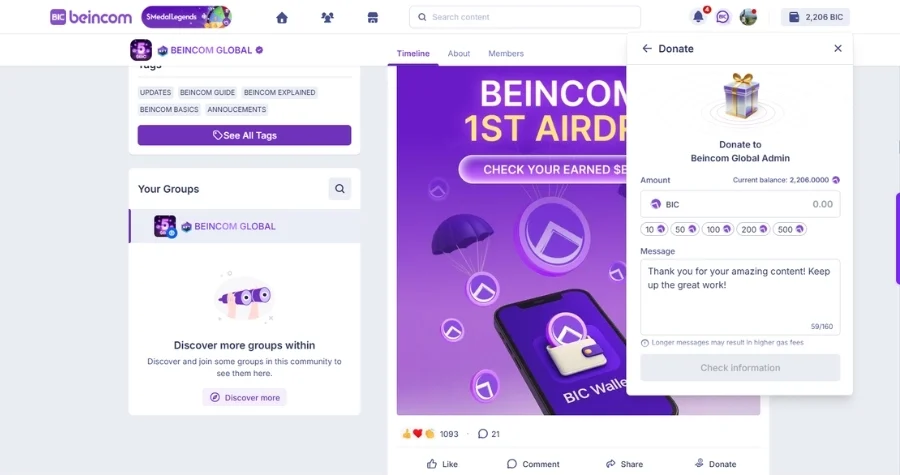
- Leverage the built-in Donation system powered by BIC Token to reward contributions in real time. Whether it’s a helpful post, solving a team blocker, or mentoring others — employees can send and receive BIC Token as a token of appreciation from peers or managers.
By combining recognition, communication, and tangible rewards in one place, Beincom makes motivation an everyday experience — not just a scheduled initiative.
Use Beincom to turn team engagement into a cultural habit — and reward impact the moment it happens.
FAQs
Q1. What is employee motivation?
Employee motivation refers to the level of energy, commitment, and creativity that employees bring to their work. It’s what drives people to take initiative, go the extra mile, and stay engaged over time.
Q2. How does employee motivation affect productivity?
Motivated employees are more focused, proactive, and committed — all of which directly contribute to higher productivity, better collaboration, and improved outcomes.
Q3. What are the best ways to motivate employees effectively?
Some of the most effective ways include: recognizing achievements publicly, offering meaningful growth opportunities, building a strong team culture, giving regular feedback, and aligning work with purpose. Personalized motivation works better than generic perks.
Q4. Can financial incentives alone keep employees motivated?
No. While financial rewards can boost short-term performance, long-term motivation is sustained by intrinsic factors — like autonomy, purpose, recognition, and a positive work environment.
Q5. What tools help in motivating employees consistently?
Platforms like Beincom can help companies motivate employees consistently by combining community engagement, peer recognition, and token-based rewards (like BIC Token donations) in one unified experience.
Beincom


