

“You will never find time for anything. If you want time, you must make it.” – Brian Tracy. Time is the most valuable asset in life, and how we use it determines our success and quality of life. Effective time management techniques help you organize your work and life efficiently, allow you to focus on what truly matters and reach your goals more easily. Mastering time management methods will improve your daily productivity and reduce stress.
Here are 5-time management techniques you should know to master your time.
Why Time Management Matters

Time management skills play a crucial role in both personal life and work. Specifically, they help:
Increase productivity
Time management skills help optimize the use of time. You will learn how to prioritize important tasks, avoid wasting time on unnecessary work, and focus on what truly needs to be accomplished. As a result, you can complete more tasks in less time, significantly boosting your work efficiency.
Achieve goals
Time management methods help you clearly define your goals and create a specific plan to achieve them. Instead of getting caught up in unimportant tasks, you will know how to set priorities and allocate time for activities that drive you towards your larger goals.
Avoid procrastination
By creating a specific work schedule, setting deadlines, and using techniques like Pomodoro to stay focused, you will avoid procrastination. With this skill, you break tasks into smaller steps, make them more engaging, eliminate distractions, and ultimately optimize your performance and reduce stress caused by procrastination.
Reduce stress and pressure
Time management skills help you avoid stress from work and time pressures. By planning effectively, you can allocate time for each task, avoid the feeling of being overwhelmed by unexpected tasks, and increase your ability to cope with unforeseen situations.
Improve decision-making abilities
Developing time management skills helps you organize work efficiently, impacts your decision-making abilities. As you learn to plan, prioritize tasks, and allocate time for important activities, you are making strategic and optimized decisions. This gradually hones your ability to assess situations, understand priorities, and recognize the consequences of each decision, leading to a deeper understanding of how to make effective decisions in both life and work.
Maintain work-life balance
Good time management techniques help you maintain a balance between personal life and work. Instead of letting work consume all your time, you’ll be able to allocate time for family, friends, and personal hobbies, leading to a more fulfilling and balanced life.
Limit bad habits
Time management plays a key role in reducing bad habits. By focusing on planning and prioritizing tasks, you can create an environment conducive to eliminating or replacing unhealthy habits. Time management also helps you stay focused on goals and priorities, offering a better opportunity to develop positive habits in life and work.
Enhance self-regulation
Time management helps you become more self-reliant in managing your work schedule and personal time. You will be able to adjust your schedule to meet your needs and goals, creating flexibility in your daily life.
Optimize creativity
Time spent reflecting and being creative is essential for finding new solutions and generating unique ideas. Time management skills allow you to carve out time to relax, rest, and find inspiration, creating an environment that fosters creativity.
The 5 Best Time Management Techniques

1. Pomodoro Technique
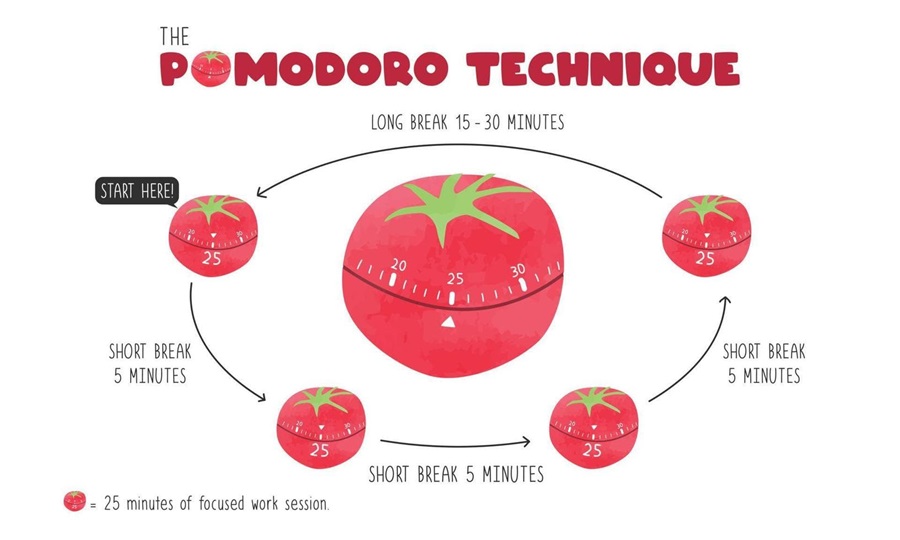
The Pomodoro Technique is a time management method that helps you maintain high focus and avoid prolonged fatigue. Invented by Francesco Cirillo in the late 1980s, this method has proven to improve productivity and reduce stress at work.
The Pomodoro Technique breaks work into short sessions, each lasting about 25 minutes, called a “Pomodoro,” followed by a short 5-minute break. After four Pomodoros, you take a longer break, usually ranging from 15 to 30 minutes. These short intervals help maintain peak focus during each session without leading to burnout.
When applying this technique, make sure to eliminate all distractions and focus on just one task during each Pomodoro session. For example, if you’re writing a report, don’t check your emails or respond to messages during those 25 minutes. A study from the University of California found that it takes an average of 23 minutes to regain focus after being distracted. Therefore, the Pomodoro Technique helps you stay focused and avoid unnecessary interruptions.
2. Eisenhower Matrix (Urgent-Important Matrix)

The Eisenhower Matrix is one of the most effective time management tools. It helps you prioritize tasks based on their urgency and importance, allowing you to focus on what truly matters. It is divided into four quadrants:
- Important and Urgent: Tasks that need to be completed immediately, such as handling emergencies or meeting impending project deadlines.
- Important but Not Urgent: Long-term valuable tasks, such as planning or personal development. These are the tasks you should allocate the most time to.
- Not Important but Urgent: Tasks that others can handle or that don’t contribute much to long-term goals but require immediate attention.
- Not Important and Not Urgent: Activities that do not impact work outcomes, such as browsing social media or entertainment.
This matrix helps not only in organizing work but also in guiding you to focus on tasks that have the greatest long-term value. For example, when applying this during a workday, you may realize that much of your time is spent on tasks that are not important but urgent, such as checking emails or answering calls. By using the Eisenhower Matrix, you can identify and minimize low-priority tasks, freeing up time for those that provide significant value.
To delve deeper into optimizing your daily tasks and boosting productivity, check out the guide on time management at work. Discover strategies to make every minute count!
3. Time Blocking Technique

Time Blocking is a time management technique that divides your workday into specific “blocks” of time for particular activities. This method helps you actively manage your time, avoid distractions, and prevent procrastination.
Time Blocking allows you to prioritize important tasks during the day. For instance, you might allocate the first block of the day for creative tasks or activities requiring high-level thinking when your energy and focus are at their peak.
When using Time Blocking, prioritize blocks of time for important tasks that cannot be postponed. To make it effective, turn off notifications, disconnect from social media during each block, and only check emails during fixed time intervals throughout the day.
4. 80/20 Rule (Pareto Principle)
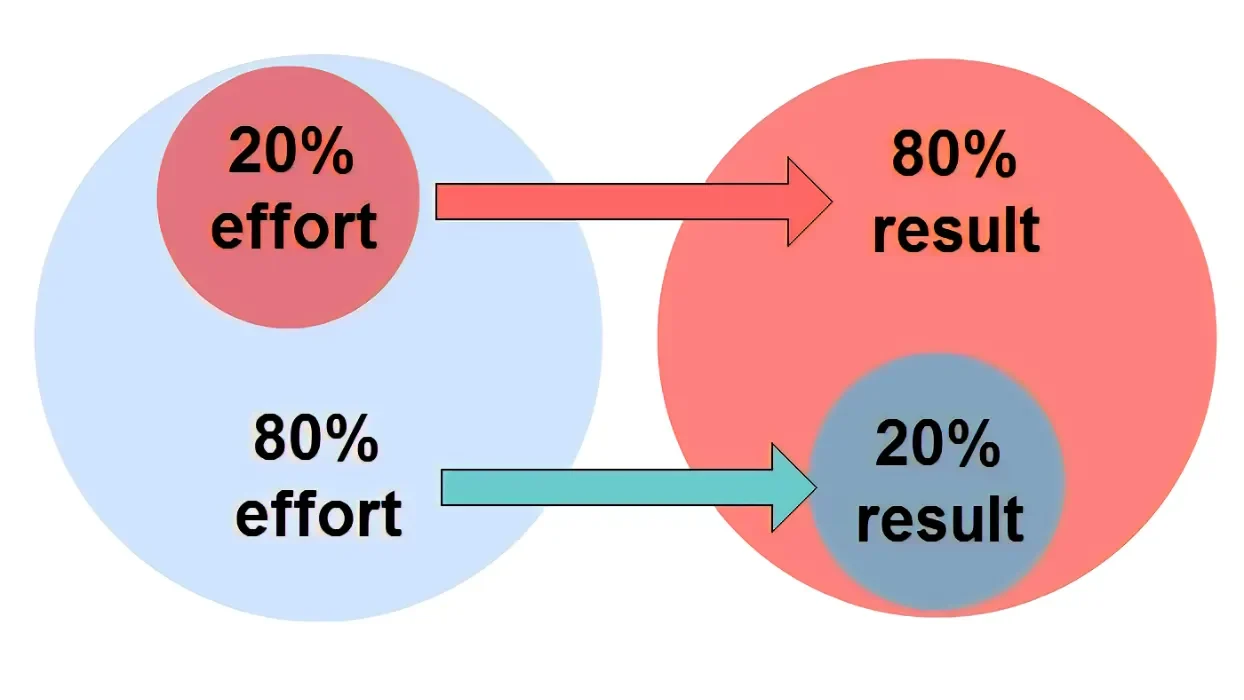
The Pareto Principle, also known as the 80/20 Rule, asserts that 80% of results come from 20% of efforts. This means that only a small portion of the tasks you perform daily will have the greatest impact.
When applying this to time management, identify the 20% of tasks that will deliver 80% of the results. For example, if you’re managing a large project, only a few key tasks will contribute most significantly to the project’s success.
To apply this principle, list all your tasks each day and ask yourself: Which tasks will provide the most value? Focus your time on these tasks before moving on to less important ones.
5. “2-Minute” Rule

The “2-Minute Rule” is a simple time management method to avoid procrastination. If a task can be completed in 2 minutes or less, do it immediately. This method helps you quickly clear small tasks, allowing you to focus on larger, more important ones.
For example, replying to a short email or organizing documents can be done quickly. By completing these tasks immediately, you not only save time for longer-term tasks but also create a sense of accomplishment and avoid leaving “work debt” behind.
Beincom – a free platform, helps you manage tasks and communicate swiftly. Its BIC Chat feature allows you to easily exchange short tasks, saving time and keeping your workflow smooth and efficient. Check it out now!
How to Implement These Techniques Effectively
To make time management techniques truly effective, consistency is key. Here are some steps to improve your time management skills:
Start with simple techniques
If you’re not familiar with time management, begin with simple yet powerful techniques like Pomodoro or the Eisenhower Matrix. These methods help you build a foundation and create effective time management habits.
Prioritize your tasks each day
One of the most crucial aspects of effective time management is identifying task priorities. Before you start each day, determine the most important tasks you need to complete. Try to accomplish these tasks first when your energy and focus are at their peak.
- Make a priority list: Write down the top 3-5 tasks of the day and focus on completing them first. These are the tasks that directly impact your end results.
- Consider long-term and short-term tasks: While short-term tasks may be urgent, don’t forget that long-term tasks are equally important for your goals. This will help you avoid focusing only on “urgent” tasks and neglecting your bigger objectives.
Minimize distractions
One of the biggest reasons many people struggle with time management is distractions. Things like social media, constant emails, or interruptions from others can disrupt your work.
- Block distractions: Use website-blocking apps or enable “Do Not Disturb” mode on your phone while working. If necessary, place your phone out of reach or turn off notifications.
- Create an efficient workspace: Ensure that your workspace is optimized for focus. Eliminate unnecessary items and create a comfortable environment conducive to work.
Create a detailed plan
To optimize time management, you need a detailed plan for the day, week, or month. Planning gives you a broad view of what needs to be done and how much time to allocate for each task.
- Use task management tools: Try apps like Trello, Asana, or Google Calendar to organize your work. Noting down tasks and deadlines will help you track progress more easily.
- Plan ahead the night before: Spend 15-20 minutes each evening planning for the next day. This will help you avoid surprises and have a clear roadmap for the morning.
Track progress and adjust flexibly
Tracking progress is an important part of effective time management. As you begin to implement your plan, remember to assess the results at the end of each day or week.
- Evaluate and adjust: Each week, take some time to review whether you’ve been sticking to your plan. If you’ve missed tasks, assess the reasons why and adjust your methods or schedule accordingly.
- Don’t fear change: Time management is an ongoing process of improvement. If you find a technique isn’t working for you, don’t hesitate to change or try other methods.
Conclusion
To succeed in time management, it is essential not only to apply techniques but also to cultivate a lifestyle that prioritizes and focuses on goals. With effective time management, you can significantly improve productivity, reduce stress, and achieve your personal and professional goals. As Brian Tracy said, “You will never find time for anything. If you want time, you must make it.” Make time for what truly matters and see the difference in your life.
Beincom


