If you’ve spent any time in a workplace meeting, you’ve probably heard phrases like “let’s circle back,” “move the needle,” or “focus on the low-hanging fruit.” These expressions are common in many industries, especially in corporate environments where teams rely on shared terminology to communicate quickly. This type of language is known as industry jargon.
While business jargon can make conversations more efficient among people in the same field, it can also create confusion when overused. Not everyone interprets these phrases the same way.
This article will show your popular industry jargons and their alternatives so you can communicate effectively in the workplace. Let’s dive in!
What Is Industry Jargon?
Industry jargon refers to specialized words, phrases, or expressions commonly used within a specific profession, field, or workplace environment. These terms often develop over time as professionals create shorthand ways to describe processes, strategies, tools, or concepts that frequently come up in their work. Because everyone in the same field understands the context, jargon can make communication faster and more efficient.
However, jargon can also create barriers when the audience isn’t familiar with those terms. Someone outside the industry may struggle to understand what a phrase actually means, even if the concept itself is simple. That’s why it’s important to recognize when corporate jargon or professional jargon is helpful—and when it might be clearer to use plain language instead.
It’s also useful to distinguish jargon from other types of workplace language. Buzzwords are trendy terms that become popular in business conversations (like disruption), while slang is informal language used casually in conversation. In contrast, industry jargon typically develops from practical professional use, even though it can sometimes overlap with buzzwords over time.

Why Industry Jargon Exists
Even though many people complain about it, industry jargon exists for a reason. In many professional environments, specialized language helps teams communicate ideas more efficiently and accurately. When everyone understands the terminology, it can save time and reduce the need for lengthy explanations.
Faster Communication
One of the main reasons business jargon develops is efficiency. Instead of explaining a complex concept from scratch, professionals often use a short phrase that everyone in the field already understands. For example, a marketing team might refer to a conversion funnel instead of describing every stage of the customer journey.
A Shared Professional Language
Jargon also creates a shared vocabulary within an industry. When people work in the same field for long enough, certain terms naturally become part of everyday communication. This shared language helps teams collaborate more easily and signals that everyone is operating with the same understanding.
Describing Complex Ideas
Some industries deal with complicated systems, technical processes, or strategic frameworks. In these cases, professional jargon can help describe concepts that would otherwise take several sentences to explain. Fields like technology, finance, and marketing often rely on specific terminology because the ideas behind the terms are complex.
However, while workplace jargon can be useful among experts, it doesn’t always translate well outside the industry. That’s why understanding when—and when not—to use jargon is an important part of effective communication.

Common Industry Jargon (+ Alternatives)
Many workplace conversations include industry jargon that sounds professional but may not always be clear to everyone. These phrases often become habits in corporate communication, even though simpler language could express the same idea just as effectively. Below are some common examples of business jargon, what they mean, and what you can say instead.
#1. Circle back
Its meaning refers to returning to a topic or discussion later, usually after more information becomes available or after other priorities are addressed.
Example sentence:
“We’re still waiting for the updated customer feedback from the research team. Let’s circle back to this proposal once we have the full report.”
What to say instead:
Talk about it later / Revisit this later
#2. Move the needle
This phrase means making a noticeable impact on results or performance.
Example sentence:
“Posting more often on social media might increase visibility. But if we want to move the needle on revenue, we need to focus on improving conversions.”
What to say instead:
Make a real difference / Have a meaningful impact
#3. Low-hanging fruit
This expression refers to tasks or opportunities that are easy to accomplish and produce quick results.
Example sentence:
“Redesigning the entire product will take months. For now, let’s focus on the low-hanging fruit like fixing the broken signup form and simplifying the checkout page.”
What to say instead:
Quick wins / Easy tasks
#4. Bandwidth
In workplace jargon, bandwidth refers to the amount of time or capacity someone has available for additional work.
Example sentence:
“I’d like to help with the new campaign. But I’m already working on two product launches this week, so I don’t really have the bandwidth right now.”
What to say instead:
Time / Availability / Capacity
#5. Boil the ocean
This phrase describes trying to solve an overly large problem or attempting to do too many things at once.
Example sentence:
“Launching five new features at the same time might be too ambitious. Let’s not boil the ocean—let’s focus on improving the feature customers already use the most.”
What to say instead:
Do too much at once / Overcomplicate things
#6. Touch base
Its meaning refers to briefly checking in with someone to discuss progress or updates.
Example sentence:
“I know everyone’s busy this week. Let’s touch base tomorrow morning to make sure the proposal is ready before we send it to the client.”
What to say instead:
Check in / Follow up
#7. Take it offline
This phrase means continuing a discussion separately outside the current meeting.
Example sentence:
“This discussion about the technical implementation is important. But since we still have other agenda items, let’s take it offline and talk after the meeting.”
What to say instead:
Discuss it later / Talk separately
#8. Deep dive
Its meaning refers to examining a topic in detail, often by analyzing data or processes closely.
Example sentence:
“The overall numbers look good, but something feels off. Next week we should do a deep dive into the customer retention data.”
What to say instead:
Analyze in detail / Look closely
#9. Quick win
This phrase refers to an improvement or task that can produce positive results quickly with minimal effort.
Example sentence:
“Fixing the broken signup form could be a quick win while we work on larger product improvements.”
What to say instead:
Easy improvement / Simple result
#10. Synergy
This term refers to the idea that collaboration between teams or organizations can produce better results together.
Example sentence:
“The marketing and product teams have been working separately for months. If we collaborate earlier, we can create better synergy during the launch.”
What to say instead:
Work well together / Collaborate effectively
#11. Hard stop
This phrase refers to a strict time when a meeting or activity must end.
Example sentence:
“We still have a few more items to discuss. Just a reminder that we have a hard stop at 3 PM because several people have another call.”
What to say instead:
We must finish by / The meeting ends at
#12: Reinvent the wheel
This expression means creating something from scratch when a solution already exists.
Example sentence:
“There are already several reliable tools for project management. Let’s not reinvent the wheel by building a custom system ourselves.”
What to say instead:
Do unnecessary work / Build something that already exists
#13: On the same page
This phrase means making sure everyone shares the same understanding about a topic or plan.
Example sentence:
“Before we move forward with the campaign, I want to review the timeline again. I just want to make sure we’re all on the same page.”
What to say instead:
Have the same understanding / Agree
#14: Run it up the flagpole
This phrase means testing an idea with others to see their reaction before fully committing.
Example sentence:
“This idea might work, but I’m not sure how leadership will respond. Let’s run it up the flagpole before we invest too much time in it.”
What to say instead:
Test the idea / Ask for feedback
#15: In the loop
This expression means being kept informed about updates or decisions.
Example sentence:
“The client has been asking for updates on the timeline. Let’s keep them in the loop so they know what’s happening.”
What to say instead:
Keep informed / Keep updated
#16: Buy-in
This term refers to gaining approval or support from stakeholders before moving forward.
Example sentence:
“The strategy sounds promising, but we’ll need buy-in from senior leadership before we allocate resources to the project.”
What to say instead:
Approval / Support
#17: Blue-sky thinking
This phrase refers to brainstorming creative ideas without worrying about practical constraints.
Example sentence:
“For the first part of the workshop, let’s focus on blue-sky thinking. Don’t worry about budgets or timelines yet—just share any ideas you have.”
What to say instead:
Brainstorm freely / Think creatively
#18: 30,000-foot view
This expression means looking at a situation from a broad perspective rather than focusing on details.
Example sentence:
“We’ve been discussing the technical details for an hour. Let’s step back and take a 30,000-foot view of the overall strategy.”
What to say instead:
Big-picture view / Overall perspective
#19: Trim the fat
This phrase refers to removing unnecessary costs, steps, or elements to improve efficiency.
Example sentence:
“The proposal looks good, but it’s a bit too complicated. Let’s trim the fat and focus on the parts that actually deliver value.”
What to say instead:
Cut unnecessary parts / Reduce costs
#20: Drill down
Its meaning refers to examining something in greater detail, especially when analyzing data, reports, or problems.
Example sentence:
“The sales numbers look good overall, but we should drill down into the regional data to understand why conversions dropped in Europe last quarter.”
What to say instead:
Look more closely / Analyze in detail
#21: Game plan
This phrase refers to a clear strategy or plan of action for achieving a specific goal.
Example sentence:
“Before we start the campaign, let’s review the game plan so everyone understands the timeline and responsibilities.”
What to say instead:
Plan / Strategy
#22. Ducks in a row
This expression means making sure everything is properly organized and prepared before moving forward.
Example sentence:
“Before presenting this proposal to the client, let’s make sure we have all our ducks in a row, including the budget estimates and timeline.”
What to say instead:
Be fully prepared / Get everything ready
#23. On the back burner
This means to delay or deprioritize something while focusing on more urgent tasks.
Example sentence:
“We like the idea of launching a podcast, but with the product release coming up next month, we’ll need to put that project on the back burner for now.”
What to say instead:
Delay it / Do it later / Deprioritize it
#24. Get the ball rolling
This means to start a process or begin working on something.
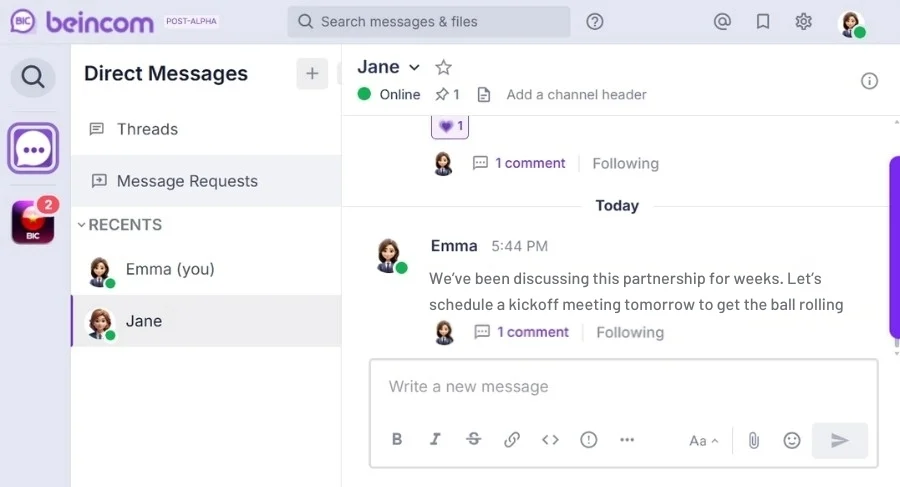
Example sentence:
“We’ve been discussing this partnership for weeks. Let’s schedule a kickoff meeting tomorrow to get the ball rolling.”
What to say instead:
Start the project / Begin the process
#25. Put a pin in it
Its meaning refers to temporarily pausing a discussion or decision so the team can return to it later, usually when there isn’t enough time to address it properly or when more information is needed.
Example sentence:
“That’s an interesting idea for expanding the platform, but we’re running out of time in this meeting. Let’s put a pin in it and come back to it next week.”
What to say instead:
Pause the discussion / Talk about it later
#26. Open the kimono
This phrase means to reveal internal information, data, or strategies that are usually kept private. Be aware that it can sound informal or inappropriate in some contexts.
Example sentence:
“If we want investors to trust the projections, we may need to open the kimono and show them the real numbers behind our growth model.”
What to say instead:
Be transparent / Share internal information
#27. Elephant in the room
Its meaning refers to an obvious problem, issue, or uncomfortable topic that everyone is aware of but avoids discussing openly.
Example sentence:
“We’ve been reviewing the marketing strategy for an hour, but no one has mentioned the elephant in the room—our customer churn rate has doubled in the last quarter.”
What to say instead:
An obvious problem / The issue everyone is avoiding
#28. Push the envelope
This phrase means to go beyond normal limits or try something innovative and risky.
Example sentence:
“If we want this campaign to stand out, we need to push the envelope instead of repeating the same format we used last year.”
What to say instead:
Try something new / Go beyond the usual limits
#29. In the pipeline
This expression refers to something that is currently being developed or planned but not finished yet.
Example sentence:
“We can’t announce the new feature yet, but several improvements are already in the pipeline for the next product update.”
What to say instead:
Being developed / In progress
#30: Ahead of the curve
Its meaning refers to being more advanced, innovative, or better prepared than others, especially when adopting new ideas, technologies, or strategies earlier than the competition.
Example sentence:
“Companies that adopted AI tools early are already ahead of the curve compared with competitors that are just starting to experiment.”
What to say instead:
More advanced / Better prepared
#31: Run the numbers
This expression means to analyze financial data or calculations before making a decision.
Example sentence:
“Before we commit to the new expansion plan, we should run the numbers to make sure the investment actually makes sense.”
What to say instead:
Analyze the data / Do the calculations
#32: Learn the ropes
Its meaning refers to learning the basic skills, processes, or procedures needed to perform a job or handle a new responsibility.
Example sentence:
“Give the new team members a few weeks to learn the ropes before assigning them to the more complex projects.”
What to say instead:
Learn how things work / Get familiar with the process
#33: Keep your eye on the ball
Its meaning refers to staying focused on the main goal or task without getting distracted by less important issues.
Example sentence:
“We’re getting distracted by minor design details. Let’s keep our eye on the ball and focus on improving the user experience.”
What to say instead:
Stay focused / Focus on the main goal
#34: Call the shots
This phrase means to be the person who makes the final decisions.
Example sentence:
“The regional managers can suggest changes, but the executive team will call the shots on the final strategy.”
What to say instead:
Make the final decisions / Be in charge
#35: A long shot
This expression refers to something that is unlikely to succeed but still possible.
Example sentence:
“Landing this client would be a long shot since they usually work with larger agencies, but it’s still worth submitting a proposal.”
What to say instead:
Unlikely chance / Small possibility
When It Actually Makes Sense to Use Industry Jargon
Although industry jargon can sometimes create confusion, it isn’t always a bad thing. In the right context, specialized language can make communication more efficient and precise.
Here are a few situations where using industry jargon actually makes sense.
Technical Discussions
In highly specialized fields, technical jargon helps experts communicate complex concepts accurately.
For example, engineers discussing software architecture might use terms like “API integration,” “microservices,” or “deployment pipeline.” Explaining each of these concepts in plain language every time would slow down the conversation.
Instead, shared technical vocabulary allows professionals to focus on solving problems rather than repeatedly defining familiar concepts.
Communication Between Experts
Jargon is also useful when people with the same expertise are collaborating. In these situations, industry terms function as shortcuts for complex ideas.
For instance, a marketing team discussing campaign performance might naturally refer to metrics such as “conversion rate,” “customer acquisition cost,” or “A/B testing.” Since everyone in the team understands these terms, the discussion becomes faster and more efficient.
Using the correct terminology can also signal professionalism and familiarity with industry standards.
Internal Documentation
Within organizations, jargon often appears in internal documentation such as process guides, product documentation, or internal reports.
Because these materials are usually written for employees who already understand the company’s systems and workflows, using specialized terminology can make the documents more concise.
For example, a product team documenting feature development may refer to concepts like “sprint planning,” “backlog prioritization,” or “release cycles.” These terms are widely understood within product teams and help keep documentation focused and practical.

Read more: Internal Communication: How to Connect, Engage & Align Teams
Specialized Training Materials
In training programs designed for professionals entering a particular field, industry terminology becomes an important learning tool.
New employees, students, or trainees need to become familiar with the language used in their profession. Training materials often introduce jargon gradually while explaining what each term means.
Over time, this shared vocabulary helps professionals communicate more effectively within their field.
In short, jargon can be helpful when everyone involved understands it and when it truly improves efficiency. The key is knowing when specialized language adds clarity—and when it simply makes communication more complicated.
For more tips to improve communication in the workplace, check this article: 7 Simple Ways to Improve Team Communication Skills
How to Avoid Overusing Industry Jargon
Even though industry jargon can be useful in certain situations, overusing it often makes communication harder rather than easier. The good news is that avoiding jargon-heavy communication doesn’t require changing your entire writing style. Small adjustments can make your message much clearer.
Here are a few practical ways to reduce unnecessary jargon in everyday communication.
Prioritize Plain Language
One of the simplest ways to avoid confusing jargon is to choose plain, direct language whenever possible.
Instead of using complicated buzzwords, ask yourself if there’s a simpler way to say the same thing. For example, phrases like “circle back” or “move the needle” can often be replaced with clearer alternatives such as “talk about it later” or “make a real impact.”
Plain language makes your message easier to understand, especially when communicating with clients, customers, or colleagues from different departments.
Explain Technical Terms When Needed
Sometimes technical terms are unavoidable—especially in specialized fields like engineering, finance, or marketing. When that happens, it helps to briefly explain the concept the first time you mention it.
For example, instead of assuming everyone understands a term like “customer acquisition cost,” you could clarify it by adding a short explanation.
This approach allows you to keep the professional terminology while still making the information accessible to a broader audience.
Avoid Buzzword-Heavy Communication
Certain phrases become popular in business culture even though they don’t add much meaning. Overusing these buzzwords can make emails, presentations, or meetings feel unnecessarily complicated.
If a sentence sounds impressive but doesn’t clearly explain anything, it’s often a sign that jargon is being used just for effect.
When writing or speaking, try focusing on clarity instead of sounding corporate.
Write the Way You Would Naturally Speak
A helpful rule of thumb is to write the way you would normally speak in a clear conversation.
If a phrase feels unnatural or overly formal when spoken out loud, it probably doesn’t belong in your writing either. Using a conversational tone makes communication more approachable and easier for others to understand.
In many cases, the best communication style is simply clear, direct, and human—without unnecessary jargon getting in the way.

Learn more: 60+ Good Morning Messages to Inspire Your Team Every Day
Beincom