Have you ever sent a simple emoji and somehow got a weird reaction back?
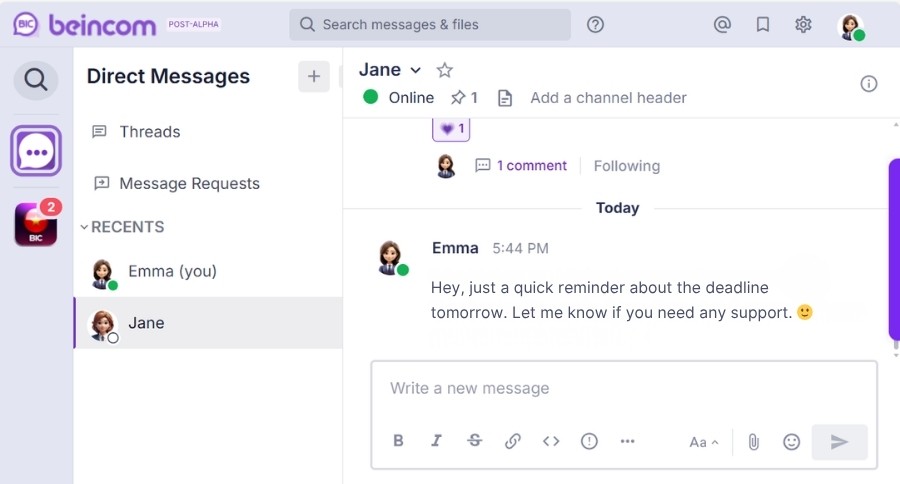
Maybe you replied with a 👍 thinking it meant “got it,” but the other person felt like you were being dismissive. Or you added a 🙂 to sound polite, but it came across as passive-aggressive instead.
The truth is, emojis aren’t as simple as they seem. While they’re meant to make communication clearer and more expressive, they can also do the exact opposite—especially in digital conversations where tone is easy to misread.
In this article, we’ll break down what emojis really mean in communication, why they often get misunderstood, and how to use them more effectively—so your messages say exactly what you intend.
What Do Emojis Really Mean in Communication?
At first glance, emojis seem pretty straightforward. A smile means happy, a thumbs up means agreement, and a laughing face means something is funny.
But in reality, emojis don’t have fixed meanings.
Instead, their meaning depends heavily on context, tone, and the relationship between people. The same emoji can feel completely different depending on who sends it, how it’s used, and what was said before it.
For example, a simple 🙂 can come across as:
- friendly and polite in one conversation
- slightly awkward in another
- or even passive-aggressive in certain situations
That’s because emojis don’t exist on their own—they’re interpreted as part of a larger message.
Another important factor is that emojis often act as a substitute for tone in digital communication. Since text messages don’t include facial expressions or voice cues, people use emojis to fill in those gaps. But the problem is, not everyone reads those signals the same way.
What makes this even more complex is that there’s no universal rulebook for emoji usage. People develop their own habits based on personal experience, social norms, and even cultural background.
So while emojis are meant to make communication easier, they can sometimes create more ambiguity instead—especially when assumptions don’t match reality.

Working remotely? Check out our guide on avoiding miscommunication in remote teams to improve clarity and teamwork: Effective Remote Team Communication: Overcome Distance, Work Smarter
How Emojis Affect Communication Tone
In digital communication, tone is often the missing piece. You don’t have facial expressions, voice, or body language—just words on a screen. That’s where emojis come in.
Emojis are often used to add tone and emotion to a message. They can make a sentence feel warmer, softer, or more friendly.
For example:
- “Sounds good” can feel neutral or even a bit cold
- “Sounds good 🙂” feels more polite and approachable
- “Sounds good 😂” completely changes the tone to something more playful
A small emoji can completely shift how a message is perceived.
But this is also where problems start.
Because emojis influence tone, they can easily be misinterpreted. What one person sees as friendly, another might read as sarcastic, passive-aggressive, or even dismissive.
For instance:
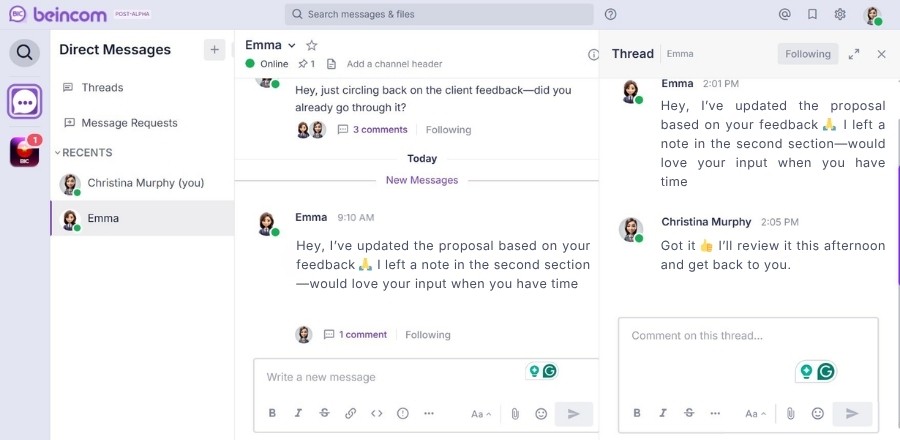
- 👍 might mean “got it” to the sender
but to the receiver, it can feel like “conversation over” - 🙂 might feel polite
but in some contexts, it can come across as forced or insincere
Another issue is inconsistency. Some people use emojis frequently, while others rarely use them at all. So when someone suddenly adds (or doesn’t add) an emoji, it can change how their message is interpreted.
In short, emojis are powerful—but also unpredictable.
They can make communication feel more human and expressive, but they can also introduce confusion if the tone isn’t interpreted the same way on both sides.
Emoji Meanings That Can Change Across Cultures
You might think emojis are universal. After all, a smile looks like a smile everywhere.
But research shows that’s not entirely true.
Studies comparing emoji usage in Eastern countries (like Japan and China) and Western countries (like the US and UK) found that while people use similar emojis, the way they interpret and use them can differ based on culture and communication style.
In other words:
👉 Same emoji
👉 Different meaning
Here are some common examples.
Slightly Smiling Face
🙂
You’d think a gentle, upturned smile is the universal sign of mild happiness or politeness.
In many Western countries like the US and UK, it’s often used for a subtle “I’m okay with this” or a soft agreement in casual chats.
But head to many Asian countries like Vietnam or China, and this emoji takes on a much cooler tone. Because it’s one of the least enthusiastic “positive” faces available, many interpret the Slightly Smiling Face as a sign of skepticism, disbelief, or even passive-aggressive politeness—like you’re forcing a smile while secretly doubting the other person or just humoring them. It can come across as insincere or distant rather than friendly.
In high-context Eastern communication styles, where subtlety reigns, this one small curve can quietly shift the entire vibe of a message.
Face with Tears of Joy
😂
This one dominates emoji usage stats in the West—it’s the go-to for “I’m literally laughing out loud” or sharing something hilariously relatable.
Research on East-West differences shows that while people in Japan, China, and other Eastern countries also use laughter-related emojis, they often prefer more restrained or context-specific ones to maintain harmony.
The heavy “tears of joy” version can sometimes feel overly dramatic or intense in collectivist cultures that value subtlety to avoid seeming too emotional or disruptive.
Western users lean into it for expressive self-expression, while Eastern users might opt for lighter smiles or sweat-drop variants to keep things balanced and polite.
Grinning Face with Sweat
😅
Western users often send the Grinning Face with Sweat to show nervous laughter, awkward relief (“Whew, that was close!”), or mild embarrassment after a close call or clumsy moment.
In East Asian contexts, especially influenced by Japanese anime and manga traditions where the big sweat drop is a classic trope, this emoji lands more strongly on awkwardness, frustration, or “this is uncomfortable but I’m smiling through it.” It aligns well with high-context communication, where people downplay negative feelings to preserve group harmony.
The grin + sweat combo can feel like a polite way to diffuse tension without directly complaining—something that resonates deeply in cultures that prioritize indirectness over blunt emotional displays.
Thinking Face
🤔
The Thinking Face is pretty consistent globally: it signals pondering, skepticism, or “Hmm, let me consider that.”
Western users love it for playful doubt or deep thought in debates. Eastern users, particularly in more collectivist settings, might employ it similarly but with extra layers of politeness—using it to soften disagreement or show they’re carefully weighing options without wanting to cause conflict.
The slight differences usually come down to communication style rather than a total meaning reversal.
Baby Angel
👼
In the West, the Baby Angel (or halo emoji) often means innocence, a good deed, or “I’m being angelic/sweet.”
In China, however, it carries a much darker association with death or passing away, which can make it feel threatening or inappropriate rather than cute. What you intend as lighthearted praise could land as ominous.
Eyes
👀
In many Western conversations, Eyes emoji means “I see you” or “I’m paying attention”—often with a hint of curiosity, suspicion, or “wait, what?” It’s great for highlighting something shady, interesting, or gossip-worthy.
Across cultures, the interpretation stays relatively consistent because eye contact and observation are fairly universal human signals. However, in some contexts (including parts of Asia), it can lean more toward watchful monitoring or even subtle flirtation/shading depending on the surrounding text.
The power of lies in its ambiguity, which makes it versatile—but also easy to misread if the cultural lens around indirect communication differs.
Thumbs Up
👍
In Western cultures, the Thumbs Up is straightforward positivity: “Great job!”, “I agree,” or “All good.” It’s a quick, enthusiastic seal of approval.
Travel eastward (or to parts of the Middle East and Greece), and the meaning flips dramatically. In some Middle Eastern countries and parts of Latin America, this gesture carries vulgar or highly offensive connotations—similar to giving someone the middle finger.
What feels like encouragement to you could land as rude or insulting. Even in places where Western influence has softened the old taboo, older generations or more traditional contexts might still read it negatively.
When in doubt in international business or chats, a simple word of affirmation often feels safer.
Waving Hand
👋
A waving hand feels like the most innocent greeting or farewell in the West—“Hello!” or “See you later!” with zero drama.
Avoid sending it casually in China, South Korea, or Pakistan, though. In China, especially on chat apps like WeChat, the wave often signals a strong, permanent “goodbye”—as in, ending a friendship or relationship entirely (“Don’t let the door hit you on the way out”).
In South Korea, waving with the palm out is traditionally how you beckon dogs or animals, so directing it at a person comes across as very rude. In Pakistan, it can be interpreted as hurling a string of curses, potentially escalating things fast.
Younger, globally influenced users in these countries are adopting the Western-friendly wave, but with older colleagues or in formal contexts, it’s still wise to stick to words. Imagine closing a business deal with a wave emoji—your Chinese partner might think you just severed ties, and they’d probably question your professionalism for using an emoji in the first place.
Folded Hands
🙏
Many in the West see folded hands as prayer, a high-five, or a general “thank you/bless you” vibe, often with spiritual undertones.
In Japan, it’s far more everyday: a gesture for “please” or “thank you,” showing respect or apology without heavy religious meaning.
In India and parts of Southeast Asia, it’s instantly recognized as “Namaste”—a respectful greeting or sign of gratitude.
Interestingly, in China it can sometimes be misread as clapping, which carries its own connotations (including, in some contexts, sexual ones).
The emoji’s flexibility makes it mostly positive, but the exact shade of meaning shifts with the cultural lens—prayer in one place, polite request in another.
OK Hand
👌
In the US and much of Europe, the OK hand is a clear “Everything’s good” or approval signal.
Elsewhere, it gets complicated. In Brazil and parts of Latin America, it’s a strong insult (roughly equivalent to the middle finger).
In France or Tunisia, it can mean “zero” or “worth nothing.”
In Japan, the circle shape sometimes references coins or money (which can feel awkward in money-sensitive conversations).
In Turkey, Greece, and the Middle East, it may be seen as vulgar.
Even in the West, it picked up temporary online associations with other movements in recent years.
When communicating across borders, spelling out “OK” is often the safest bet.
Sign of the Horns
🤘
Western users (especially rock fans) see Sign of the Horns as “Rock on!”—pure fun, energy, or heavy metal vibes.
In Italy, Spain, Portugal, Greece, and several Latin American countries, pointing this gesture at someone (especially with fingers upward) implies they’ve been cuckolded—their partner is cheating.
It can also serve as an apotropaic sign to ward off the evil eye or bad luck when not directed at a person.
Context and direction matter hugely here; what’s a fun concert gesture in one culture becomes a serious personal insult in another.
Victory Hand
✌️
The Victory Hand (peace sign) is generally positive—“Peace!” or “Victory!”—in most places.
But in some contexts like Argentina, it has been tied to political signaling. In the UK and Australia (when turned backward), it can become an insult similar to the middle finger.
Overall, it’s one of the less risky ones, but direction and local politics can still add unexpected layers.
Read more: How to Avoid Miscommunication at Work: 7 Practical Tips
Emojis in the Workplace: Helpful or Unprofessional?
By now, it’s clear that emojis can change how a message is interpreted. But in a professional setting, their role isn’t always straightforward.
So the question is: should you use emojis at work?
The answer depends on context.
When Emojis Actually Help
In many modern workplaces—especially remote teams—emojis have become part of everyday communication. When used appropriately, they can make messages feel more natural and less rigid.
One of their biggest advantages is helping to soften tone.
Written communication often lacks emotional cues, so even neutral sentences can come across as too direct. A simple message like “Please review this” might feel abrupt, even if that wasn’t the intention.
Adding a small emoji can make the tone feel more approachable.
Example:
“Please review this when you have time 🙂”
In this case, the emoji helps signal that the message is polite, not demanding.
Emojis can also help build rapport in internal communication. In team chats, they make conversations feel less transactional and more human, especially in fast-moving discussions.
When Emojis Become Risky
Despite their benefits, emojis can easily backfire in professional settings.
One common issue is that they can make communication feel too casual, especially when you’re talking to clients, partners, or senior stakeholders. Not everyone expects—or appreciates—informal language in work-related conversations.
They can also weaken serious messages.
If you’re discussing problems, giving feedback, or addressing something important, adding an emoji might make the message feel less clear or less confident than intended.
Example:
“We may need to revisit the strategy 😅”
In this case, the emoji can make the situation sound less serious, or suggest uncertainty.
Another key risk is cross-cultural misunderstanding.
As we’ve seen earlier, emojis don’t carry universal meanings. The same symbol can be interpreted very differently depending on cultural background, which increases the chance of miscommunication.
It Comes Down to Context
Emojis themselves aren’t unprofessional. The issue is how and when they’re used.
Before adding one, it helps to consider:
- who you’re communicating with
- how formal the situation is
- whether the message could be misinterpreted
In casual internal conversations, emojis can improve tone and engagement. In formal or sensitive situations, they can introduce unnecessary ambiguity.
A Simple Rule to Follow
If you’re unsure whether to use an emoji, ask yourself one question:
Does this make the message clearer or less clear?
If it supports your intent, it can be useful. If there’s any risk of confusion, it’s better to rely on clear language instead.
In the end, effective workplace communication isn’t about sounding friendly or formal—it’s about being understood. Emojis can help with that, but only when used with intention.

How to Use Emojis Effectively in Communication
By now, one thing is clear: emojis aren’t inherently good or bad. The difference comes down to how you use them.
If used carelessly, they can create confusion. But if used intentionally, they can actually make your communication clearer and more human.
Here are some practical ways to use emojis more effectively—without letting them backfire.
Don’t Rely on Emojis to Carry Meaning
One of the most common mistakes is using emojis as a shortcut instead of clear language.
Emojis should support your message—not replace it. If the meaning of your sentence depends on an emoji, there’s a higher chance it will be misunderstood.
Example:
“I guess that works 🙂”
Without context, it’s unclear whether this means agreement, hesitation, or passive disagreement.
A clearer version would be:
“I think this works, but I’d like to review it once more before finalizing.”
Match the Emoji to the Situation
Not every situation calls for the same tone. In casual conversations, emojis can feel natural. But in formal, sensitive, or high-stakes communication, they can feel out of place.
Before using one, consider:
- How formal the conversation is
- How well you know the other person
- Whether the message involves feedback, conflict, or decisions
If the situation is even slightly serious, it’s usually better to keep things clear and direct.
Be Careful in Cross-Cultural Communication
As we’ve seen earlier, emoji meanings aren’t universal.
The same emoji can signal friendliness in one culture and something completely different in another. This is especially important when working with international teams or global audiences.
If you’re unsure how something might be interpreted, it’s safer to rely on plain language instead of symbols.
Avoid Overusing Emojis
Using too many emojis can make your message harder to read—and sometimes less professional.
It can also dilute your tone. If every sentence includes an emoji, they stop adding value.
Instead, use them sparingly and only when they serve a clear purpose.
When in Doubt, Choose Clarity
This is the simplest rule—and the most important one.
If an emoji adds clarity, warmth, or helpful tone, it can improve your message. If it introduces even a small risk of confusion, it’s better to leave it out.
Clear communication will always be more effective than expressive but unclear messaging.
At the end of the day, emojis are just tools. And like any tool, they work best when used with intention—not habit.
For more tips to communicate well at the workplace, check out these articles:
Conclusion: Clear Communication Matters More Than Emojis
Emojis have become a natural part of how we communicate online. They can make messages feel more human, add emotional context, and even help build connections—especially in fast-paced, digital conversations.
But as we’ve seen, they’re not always as simple as they seem.
The same emoji can carry different meanings depending on context, tone, and even cultural background. What feels friendly to one person might come across as confusing—or even inappropriate—to someone else.
That’s why relying too much on emojis can sometimes create the exact problem they’re meant to solve: miscommunication.
This doesn’t mean you should avoid emojis completely. In the right situations, they can be helpful and effective. The key is using them with intention, not out of habit.
At the end of the day, clear and direct communication will always matter more than sounding expressive or “modern.”
If your message is easy to understand, you’re already doing it right—emoji or not.
Beincom